

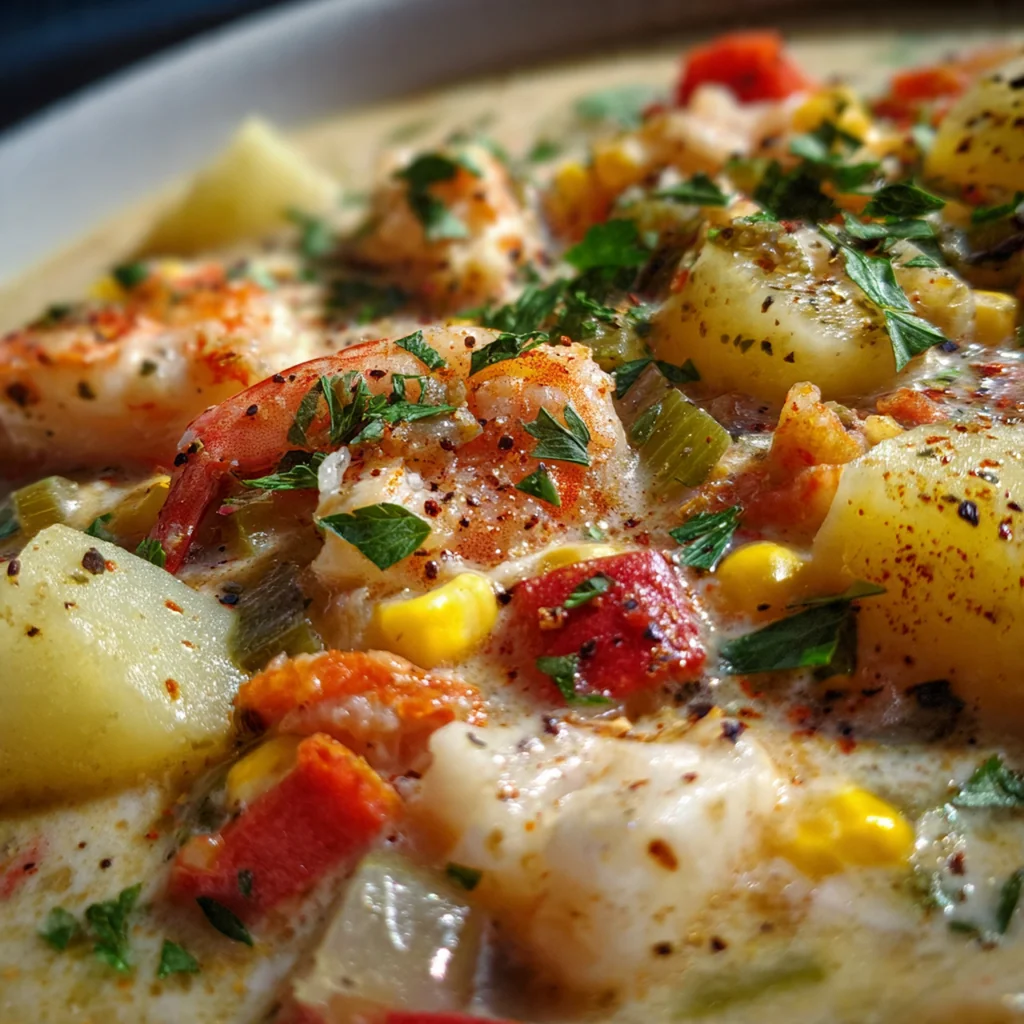
This rich seafood chowder is a classic New England comfort dish that brings the bounty of the coast right to your table. It’s a hearty, one-pot meal where tender potatoes and a variety of fresh catches simmer in a creamy, savory broth. I love how this recipe feels both rustic for a weeknight and elegant enough for company. You’ll find the whole process surprisingly straightforward for such an impressive result.
Why You'll Love This Recipe
- It’s packed with a variety of seafood for amazing flavor and texture
- You get a creamy, ultra-comforting base with tender potatoes
- It’s a complete one-pot meal ready in under an hour
- Simple enough for family dinners yet impressive for guests
- I make this whenever I need a guaranteed crowd-pleaser
Ingredients You’ll Need
- Thick-cut bacon: provides a savory, smoky foundation and renders fat for cooking the vegetables, look for good marbling for the best flavor.
- Yellow onion: diced and softened to build a sweet, aromatic base for the chowder, yellow onions offer a perfect balance.
- Celery stalks: add a subtle, fresh crunch and layer of flavor that’s essential to any great chowder base.
- Garlic cloves: minced and cooked briefly to infuse the pot with that irresistible savory aroma without burning.
- All-purpose flour: the key to a perfectly thickened broth, cooking it with the veggies eliminates any raw taste.
- Fish stock or clam juice: forms the deeply savory, oceanic backbone of your chowder, homemade stock is a game-changer.
- Yukon Gold potatoes: they hold their shape beautifully and have a buttery texture that thickens the chowder slightly as they cook.
- Bay leaf: adds a classic, subtle herbal complexity that infuses the entire pot as it simmers.
- Dried thyme: a little goes a long way to give that earthy, aromatic note that pairs so well with seafood.
- Heavy cream: creates the luxurious, rich and creamy body that makes this chowder so comforting and satisfying.
- Fresh clams: bring a sweet, briny taste of the sea; scrub fresh ones well or use quality canned in a pinch.
- Large shrimp: peeled and deveined for sweet, tender bites that cook quickly right in the hot broth.
- Sea scallops: they become beautifully opaque and tender, adding a delicate sweetness and lovely texture.
- Firm white fish: like cod or haddock, it flakes apart beautifully and soaks up all the surrounding flavors.
- Salt and black pepper: essential for seasoning the layers of flavor to your personal taste right at the end.
- Fresh parsley: a bright, optional garnish that adds a pop of color and a hint of fresh herbiness.
- Oyster crackers: the classic crunchy topping that adds texture and a fun, traditional touch to each bowl.
- Lemon wedges: an optional squeeze of fresh lemon juice just before eating brightens all the rich flavors.
How to Make It
Render the Bacon:
Place your chopped bacon in a cold, large Dutch oven and set it over medium heat. Let it cook slowly until it’s crisp and has released its flavorful fat, which will take about five to seven minutes. Scoop out the bacon bits with a slotted spoon and let them drain on a paper towel, but leave every bit of that precious drippings in your pot.
Sauté the Aromatics:
Add your diced onion and celery right into the bacon fat. Stir them occasionally and let them cook until they’ve softened and turned translucent, which should take about five minutes. Then, stir in the minced garlic and cook for just another minute until it becomes incredibly fragrant.
Make the Roux:
Sprinkle the flour evenly over the cooked vegetables and give everything a good stir until it’s fully coated. You’ll want to cook this mixture, stirring constantly, for a minute or two to toast the flour slightly. This crucial step cooks out the raw flour taste and will give your seafood chowder its perfect, lump-free thickness.
Build the Broth and Cook Potatoes:
Gradually pour in your fish stock or clam juice while whisking continuously to create a smooth, thickened base. Add in the diced potatoes, the bay leaf, and the dried thyme. Bring everything up to a gentle simmer, then reduce the heat, cover the pot, and let it cook until the potatoes are just tender when pierced with a fork.
Incorporate the Cream:
Once the potatoes are done, stir in the heavy cream and bring the chowder back to a very gentle simmer. Be careful not to let it boil vigorously at this stage, as that can cause the dairy to separate or curdle in your soup.
Cook the Seafood:
Add all your seafood—the clams, shrimp, scallops, and white fish—to the simmering pot. Gently push them down so they’re submerged and let them cook for five to seven minutes. You’ll know it’s done when the shrimp are pink, the scallops are opaque, and the fish flakes apart easily with a fork.
Final Seasoning and Serve:
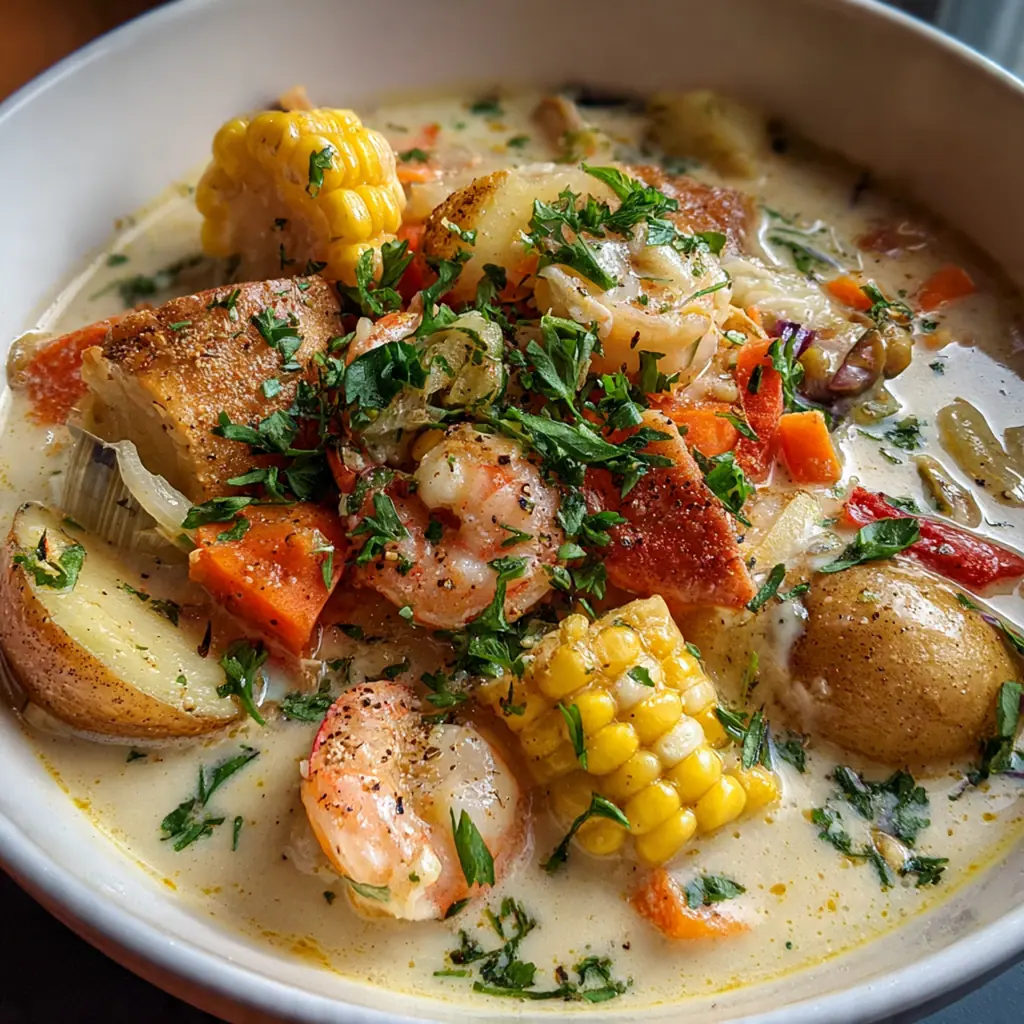
Taste your chowder and season it generously with salt and freshly ground black pepper until it sings. Don’t forget to fish out and discard that bay leaf. Ladle the hot chowder into deep bowls and top with the reserved crispy bacon and any of your favorite optional garnishes.
You Must Know
- Cooking the flour with the veggies is non-negotiable for a smooth, thick base
- Add the delicate seafood last to keep it tender and avoid overcooking
- The potatoes will continue to soften as the chowder sits, so don’t boil them to mush
- A gentle simmer after adding the cream prevents any curdling
Storage Tips
Store any leftover seafood chowder in an airtight container in the refrigerator, where it’ll keep well for up to two days. When you’re ready to enjoy it again, reheat it gently on the stovetop over low heat, stirring occasionally to prevent sticking and to warm it evenly—avoid bringing it to a boil. You might notice the chowder has thickened up in the fridge; just stir in a splash of milk, cream, or extra stock as it reheats to bring it back to your preferred consistency. I don’t recommend freezing this one, as the dairy and seafood can separate and become grainy when thawed.
Ingredient Substitutions
For the seafood, you can absolutely swap in what’s fresh or available—mussels for clams, lobster meat for scallops, or even just use a double portion of white fish if that’s what you have. If you’re out of fish stock, bottled clam juice works wonderfully, or you can use half clam juice and half vegetable or chicken broth for a different depth. A gluten-free flour blend can stand in for the all-purpose flour if needed, though the broth will be a touch thinner. While heavy cream gives the richest result, half-and-half can work in a pinch, just be extra vigilant about not letting it boil.
Serving Suggestions
I love serving this seafood chowder with a big, crisp green salad dressed in a simple vinaigrette to cut through the richness, plus plenty of warm, crusty bread for soaking up every last drop. For a truly classic New England experience, set out small bowls of oyster crackers and lemon wedges right on the table. A glass of chilled, dry white wine like Sauvignon Blanc or an unoaked Chardonnay complements the creamy seafood flavors perfectly and turns dinner into a real occasion.
Cultural Context
This style of creamy seafood chowder is deeply rooted in the New England culinary tradition, where coastal communities made the most of the day’s fresh catch combined with pantry staples like potatoes and onions. It’s a testament to thrifty, hearty cooking meant to feed a family and withstand the region’s chilly weather. You’ll find countless variations from Maine to Massachusetts, each cook swearing by their particular mix of fish and shellfish, but the soul of the dish always lies in its creamy, briny, comforting warmth. It’s less about fussy technique and more about celebrating the simple, incredible flavors of the sea.
Pro Tips
- Cut your seafood into similar-sized pieces so everything cooks evenly
- Use a mix of clam juice and homemade fish stock for incredible depth of flavor
- Let the chowder rest for five minutes off the heat before serving—it lets the flavors marry
- Always taste and season right at the end, as the seafood and broth bring their own salt
Frequently Asked Questions
For this chowder, use a firm white fish like cod or haddock. It holds its shape well during simmering without falling apart. Flakier fish can be added in the last few minutes of cooking just to heat through. The recipe also works with salmon if you prefer a richer flavor.
Yes, but with a key step: prepare the chowder base with the potatoes, but wait to add the delicate seafood until just before serving. Reheat the base gently, then add the shrimp, scallops, fish, and clams for the final 5-7 minutes of cooking to ensure they don’t become tough.
For a slightly lighter Seafood Chowder, you can use half-and-half or whole milk. The texture will be less rich but still delicious. For a dairy-free version, use full-fat canned coconut milk, which adds a subtle sweetness that pairs well with the seafood.
The seafood is done when it’s just opaque and cooked through. The shrimp will turn pink and curl, the scallops will be firm, and the white fish will flake easily. This usually takes just 5-7 minutes of gentle simmering after adding. Overcooking will make the seafood rubbery.
Keep it classic with oyster crackers or crusty sourdough bread for dipping. For a heartier New England meal, pair it with a simple side salad or a warm, buttered cornbread. A dry white wine like Sauvignon Blanc complements the flavors perfectly.